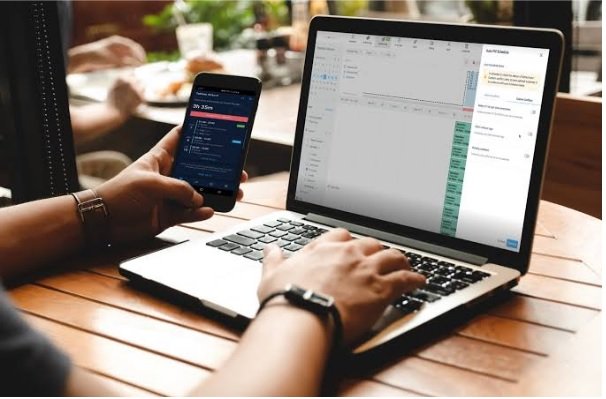
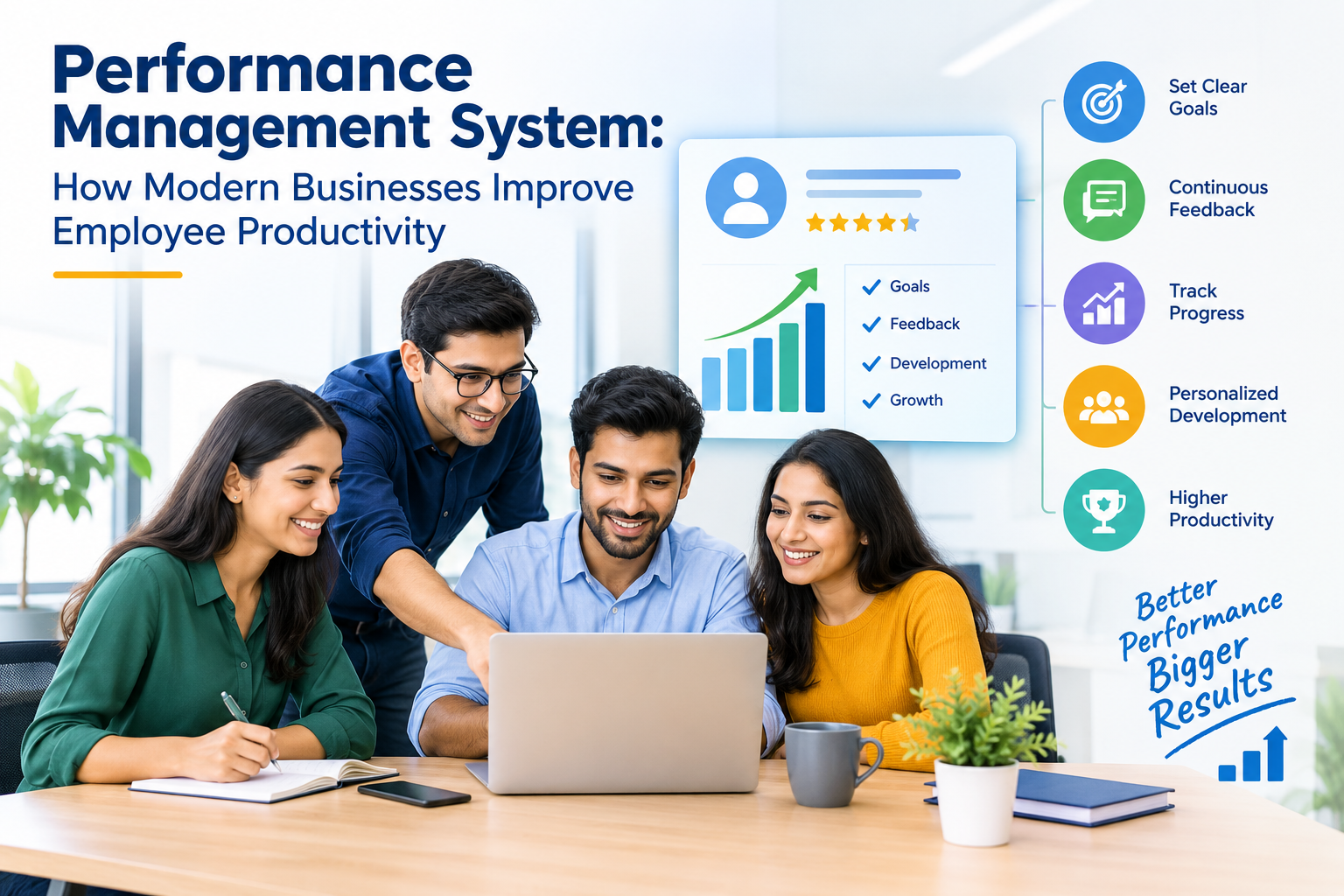
The process of managing employee performance becomes difficult when organizations expand because they must handle goals, performance records, feedback and reviews through manual operations. HR teams and managers must use spreadsheets together with emails and individual documents to monitor employee development which creates challenges for maintaining a uniform performance management system.
Businesses need to manage employee performance beyond annual reviews. This includes setting clear goals, tracking progress, providing regular feedback, and reviewing employee performance to support continuous improvement.
In this article, you will learn how modern businesses improve their employees’ performance and productivity by understanding things like features, benefits of using the system and so on.
What Is a Performance Management System?
A Performance Management System functions as a digital platform to achieve employee performance tracking goals. Businesses can use this platform to support their goal-setting process while they track employee performance, conduct performance reviews, provide feedback, develop employee growth plans and assign performance ratings.
The standard method for handling employee performance includes using spreadsheet files together with email communication, physical documents and scheduled assessment sessions. The process creates challenges for organizations because they struggle to maintain accurate records which prevents them from tracking employee development during the entire year.
A digital performance management system provides a single platform that allows employees and managers to perform all their performance management tasks. Managers use their systems to track employee targets while giving performance feedback, conducting performance assessments and recognizing staff requirements for additional training.
This type of system stands as a valuable resource that helps companies expand their operations and maintain various operational teams and multiple business locations.
How Does a Performance Management System Work?
The Performance Management System functions as a unified system that links employees together with their managers and HR staff and the organization’s leadership team.
The system maintains essential data about employees which includes their goals and performance indicators, their review history and feedback, their performance evaluation scores, their development plans and their advancement status.
Managers monitor employee performance through their use of dashboards and reports. Employees access their goals through the system which lets them track their progress while accessing the review and feedback process.
The exact process will change because each organization follows its own performance management rules and operates different software systems.
What Are the Key Features of Performance Management Software?
Organizations need to choose from various software features which depend on their specific platform, to select an appropriate Performance Management Software solution.
- Goal Management: The system enables staff members to establish personal and group objectives that their supervisors can assign to them for active monitoring.
- Performance Tracking: Managers can track their teams’ progress through this system which tracks their movement toward set goals and established performance standards.
- Performance Reviews: The system enables organizations to conduct scheduled performance evaluations through its built-in review management system.
- Continuous Feedback: The system allows managers and employees to exchange feedback through every stage of the performance evaluation process.
- Performance Ratings: The system contains rating scale methods that enable organizations to assess their employee performance.
- KPI Tracking: The system enables organizations to track their essential performance indicators which operate across different business units and staff positions.
- Employee Self-Assessment: The system enables staff members to evaluate their work development while they can also offer feedback during their performance assessment process.
- Manager Evaluation: The system enables managers to evaluate employee work through established performance goals and pre-established performance standards.
- Development Planning: The process enables organizations to find their staff members’ development needs and identify areas that require improvement.
- Performance Reports: The system generates reports with insights that enable HR teams and management staff to identify performance patterns through this process.
- HRMS Integration: Organizations can link their performance data to their HR systems and employee information through platform-specific integration options.
Organizations can achieve better performance management through these features which simplify their monitoring processes.
How Does Performance Management Software Improve Employee Productivity?
Employee productivity becomes vulnerable to multiple influences which include defined work requirements, trackable achievement targets, continuous performance monitoring, staff capabilities and learning resources availability.
Performance Management Software enables organizations to transform their existing elements into an organized system.
Managers should assign specific goals that they can measure to their staff members while they monitor their advancement over time. Regular feedback enables staff members to recognize their successful actions while they need to enhance particular aspects of their work.
The system enables managers to spot goals that are postponed or require extra monitoring for their advancement. The system enables managers to work with their employees to identify work-related obstacles which will lead to final decisions about their upcoming courses of action.
Organizations now have the chance to monitor their staff performance because employees understand their work responsibilities and they receive regular feedback about their performance progress.
Many modern HRMS platforms, including Savvy HRMS, bring these performance management activities together so that organizations can manage employee goals, feedback, reviews, and performance information through a centralized system.
What Are the Benefits of a Performance Management System?
The main benefit of using a Performance Management System is that it brings greater structure and visibility to employee performance processes.
Instead of managing performance information through separate spreadsheets, documents, and emails, organizations can maintain relevant information through a centralized system.
Some key benefits include:
- Clearer Goals: Helps employees understand their responsibilities and performance expectations.
- Continuous Feedback: Makes it easier for managers to provide feedback throughout the performance cycle.
- Better Performance Visibility: Managers and HR teams can monitor employee progress through this system.
- Reduced Manual Work: The system performs automated operations to handle repeated performance management tasks along with record creation.
- Structured Reviews: Helps organizations conduct performance reviews using consistent processes.
- Employee Development: Helps identify skill gaps and development requirements.
- Data-Based Decisions: Provides performance information that can support workforce planning and development decisions.
- Improved Accountability: Allows employees and managers to monitor their goals together with their current progress levels.
- Better Employee Engagement: Regular conversations about goals and development can create more opportunities for employee participation.
These benefits can become increasingly valuable as organizations grow and performance management becomes more complex.
How Does a Performance Management System Support Continuous Performance Management?
The traditional performance management system depends on annual employee evaluations which serve as its main assessment method. Employee performance levels tend to shift during the year because of their work assignments and their duties, the changing business focus and their personal growth.
Organizations can support continuous performance management through their Performance Management System which enables them to control goal-setting and feedback processes during all performance assessment periods.
Managers need to monitor employee progress through regular check-ins while they must give feedback, adjust work targets according to business shifts and they should discuss required employee development needs.
The manager needs to track employee progress toward their specific quarterly targets instead of waiting until year-end to evaluate their performance.
The strategy enables performance discussions to take place at appropriate times while staff members obtain chances to manage their problems before they become more critical.
How to Choose the Right Performance Management Software?
Selecting the right performance management solution depends on the organization’s size, workforce structure, performance policies, and business requirements.
Factors to consider include:
- Number of Employees: Can the software support your current workforce and future growth?
- Goal Management: Does it allow employees and managers to create, assign, and monitor goals?
- Performance Reviews: Can HR configure review cycles according to organizational requirements?
- Feedback: Does the system support regular feedback between employees and managers?
- Customization: Can performance processes, rating scales, and review forms be configured?
- Reporting: Does the software provide useful performance reports and analytics?
- HRMS Integration: Can it connect with your existing HRMS and employee database?
- User Experience: Is the platform simple enough for employees, managers, and HR teams to use?
- Data Security: How does the platform protect employee and performance information?
- Scalability: Can the solution support additional employees, departments, locations, and performance cycles?
- Technical Support: What implementation, training, and support options are available?
Organizations should focus on whether the software fits their existing performance management process rather than selecting a solution based only on the number of features it provides.
How Can Businesses Use Performance Data for Better Employee Development?
Organizations can obtain valuable information about employee development needs and current abilities and work progress through their performance data.
Performance review sessions that happen regularly enable managers to detect which employees need extra training and assistance to perform their duties. HR teams can use these insights to plan learning and development activities based on organizational and employee requirements.
Organizations can track workforce changes through performance data which shows whether employees reach their designated targets. Businesses need to watch how their workforce evolves through performance information which tracks whether staff members achieve their set business targets.
Conclusion
Overall, A Performance Management System provides organizations with a structured approach to managing employee goals, performance reviews, feedback, development, and progress. Businesses need to shift from spreadsheet-based operations and fragmented processes because digital solutions now enable them to develop unified performance management systems that maintain standard procedures.
Organizations now dedicate their efforts to employee development and productivity enhancement through Performance Management Software which allows HR teams and managers to handle performance activities with improved efficiency while employees receive better monitoring of their target achievements and advancement.
Businesses need suitable performance management solutions to develop structured performance systems that enable ongoing feedback and help them use performance data to enhance employee development systems and workforce management strategies.
Ready to simplify employee performance management?
Book your free demo today and discover how Savvy HRMS can support smarter performance management.