
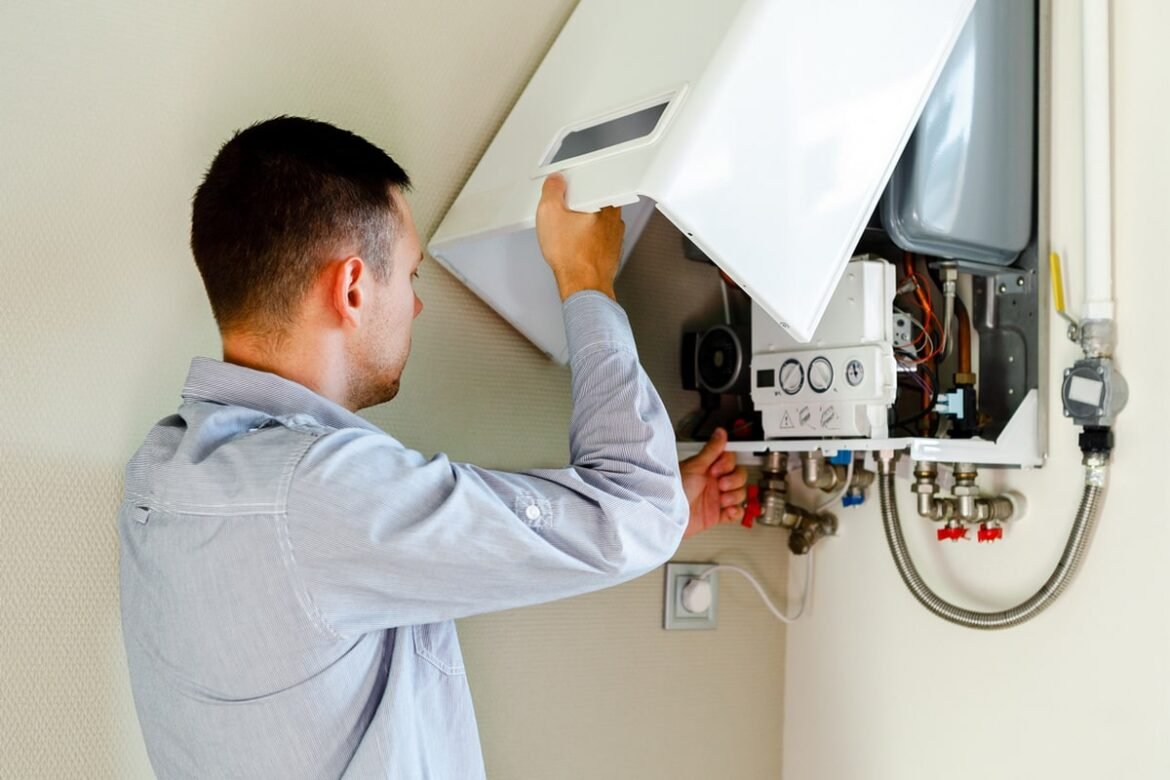
Unfortunately for most people a boiler tends to cause problems when you least want them too.
Either it’s cold outside, or there are many people in your home or it’s causing issues with your business.
While it may be tempting to replace your boiler completely, it can be a costly investment.
Understanding if it can be repaired at a reasonable cost will help you decide if you should replace your boiler.
Start by finding out what’s actually wrong
Not all boiler issues mean you need to replace your boiler. Issues can often be resolved by repairing the boiler.
A qualified heating engineer should be able to come out and identify the issue and explain what options are available to you.
While the age of your boiler is an important factor, there are other things you should also consider.
How old is the boiler? Has it had any previous issues? Has it received regular servicing? Are there parts available to replace?
If your boiler has been running well for a number of years and the issue isn’t too complicated then it could be a good idea to repair it.
However if you are constantly having to pay for repairs and unexpected down time then it may be a good idea to replace.
Consider how efficiently the boiler operates
Old boilers can be less efficient than a suitable new boiler. Particularly if you are looking to upgrade to a correctly specified condensing boiler.
However depending on how efficient your current boiler is, how much energy you use, how efficient your controls are and how well your heating system is, you could see some savings.
A new boiler may not resolve all issues with your heating. Poor insulation, incorrect controls and inefficient heating can all cause excess energy use.
Ask yourself if there are ways to improve your heating system.
Sometimes changing the controls or other parts can help improve the efficiency of your boiler.
Make sure a new system is correctly sized
Proper sizing is an important part of achieving reliable performance.
Many people think the bigger the boiler, the better the results. However the boiler needs to be correctly sized to provide heating and hot water for your property.
Too large a boiler can be inefficient while an undersized boiler can cause issues. For domestic properties engineers will take into consideration how much heat is lost, how well insulated your property is, how many bathrooms you have and how much hot water you use.
For commercial properties you may need a more detailed survey to make sure the boiler is the right size. Different areas may require different heating.
Correctly sizing your boiler will help to ensure you have a reliable boiler.
Look beyond the headline installation price
When comparing quotations for boiler installations, it makes sense to examine exactly what’s included.
Two quotations may appear similar while covering different amounts of work.
One might include new controls, system cleaning and alterations to associated pipework, while another may only cover replacement of the main appliance.
Ask whether the quotation includes removal and disposal of existing equipment, commissioning, documentation and any necessary changes to the heating system.
You should also discuss warranty conditions and ongoing servicing requirements.
A slightly more expensive quotation may provide better overall value if it includes work that would otherwise result in additional charges.
Think about disruption during installation
Replacing your boiler can cause some disruption to your heating and hot water.
For domestic properties you may need to plan around your working hours or family.
For commercial properties it can be more of an issue. Restaurants, offices and other premises may rely on heating/hot water.
Speak to your contractor to find out how long your installation will take. Ask if there will be any temporary solutions.
For larger systems you may be able to do it in stages or plan some down time.
Safety and ongoing maintenance matter
If you are having any work done on your gas boiler in the UK you should ensure your engineer is Gas Safe registered and is qualified for the correct type of installation.
You can check if they are registered.
Once your new boiler has been fitted it is important to ensure it receives the correct servicing. Follow the manufacturers guidelines and keep notes of any checks, servicing and repairs. This can help to stop small issues becoming bigger issues.
Make the decision based on long-term value
Don’t be tempted to replace your boiler quickly. Get the issue checked and find out how much it will cost to repair. Compare this to the benefits of getting a suitable replacement.
The cheapest option may not be the cheapest option over a few years.
While your boiler has an issue it doesn’t necessarily mean you need to replace it with a brand new one. Making an informed decision can help you save you from any unnecessary costs while keeping your property comfortable and running.