What Are Hair Grafts and Why Do They Matter?
One of the most common questions people ask before considering a hair transplant is, “How many grafts will I need?” The answer depends on the extent of hair loss, the desired coverage and the availability of healthy donor hair. Anyone researching a hair transplant in Chennai should understand that graft requirements are individual, not a fixed number based on age or baldness alone.
A graft, also called a follicular unit, is a naturally occurring group of hair follicles. It may contain one, two, three or occasionally four hairs. Therefore, 2,000 grafts do not necessarily mean 2,000 individual hairs. The total number of hairs depends on the composition of the grafts.
The objective is not simply to transplant as many grafts as possible. It is to create a natural-looking appearance while protecting the donor area for potential future needs.
How Many Grafts Are Generally Required?
The number of grafts varies according to the size and location of the thinning or bald area. The following figures are broad planning estimates for male pattern hair loss, not guaranteed requirements or surgical recommendations.
| Hair loss pattern | Approximate graft estimate |
| Early hairline recession | 800–1,500 |
| Receding hairline and frontal thinning | 1,500–2,500 |
| Frontal and mid-scalp thinning | 2,000–3,500 |
| Extensive frontal and crown loss | 3,000–4,500 |
| Advanced baldness | 4,000–6,000 or more, sometimes across sessions |
These estimates can overlap because two people at the same stage may have different scalp sizes, hair characteristics and coverage expectations. Some patients may need fewer grafts, while others may require a staged treatment plan.
Understanding Hair Graft Requirements by Hair Loss Stage
Specialists commonly use the Norwood scale to describe the progression of male pattern baldness. It helps assess the distribution of hair loss and plan possible coverage.
Early-stage hair loss (Norwood 2–3)
At this stage, hair loss generally appears around the temples and frontal hairline. A person may require approximately 800–1,800 grafts, depending on the recession and desired hairline design. Some individuals may not need surgery immediately, particularly when hair loss is still progressing.
Moderate hair loss (Norwood 3–4)
Hairline recession becomes more noticeable, and thinning may extend towards the mid-scalp or crown. Around 1,500–3,000 grafts may be considered, depending on the affected area. The treatment plan should prioritise natural hairline framing and appropriate coverage of thinning regions.
Advanced hair loss (Norwood 5–6)
Hair loss can involve the frontal region, mid-scalp and crown, leaving a reduced area of hair between them or no clear separation. Approximately 3,000–4,500 grafts or more may be discussed. Treatment may need to be divided into sessions because donor hair availability is limited.
Extensive hair loss (Norwood 7)
This stage involves widespread baldness, with a relatively small remaining donor region. Even when a large number of grafts is requested, complete restoration may not be possible. The surgeon must prioritise areas where transplantation can create the most balanced visual improvement.
What Factors Influence the Number of Grafts Needed?
The Norwood stage is only one part of the assessment. Several additional factors influence the final graft estimate.
- Size of the recipient area: A larger bald or thinning area generally requires more grafts than a smaller area.
- Hair thickness: Coarser hair can provide better visual coverage than finer hair, even when the graft count is similar.
- Grafts containing multiple hairs: Two patients receiving the same graft count may achieve different visual coverage because the number of hairs within each graft can vary.
- Hair and scalp contrast: The difference between hair colour and scalp skin tone can affect how visible thinning appears.
- Desired density: A patient seeking a more filled appearance may have different requirements from someone prioritising a natural hairline and balanced coverage.
- Donor hair availability: The density and quality of hair at the back and sides of the scalp determine how many grafts can be safely harvested.
A detailed scalp examination helps the surgeon assess these factors before recommending a treatment plan.
Why Donor Hair Availability Is Important
Hair transplantation involves moving follicles from a donor region, usually at the back or sides of the scalp, to areas affected by hair loss. These follicles are a limited resource. Removing too many can create visible thinning in the donor area and reduce options for future procedures.
A responsible assessment considers donor density, hair characteristics, scalp condition, previous procedures and the possibility of future hair loss. It is also important to understand that transplanted hair does not prevent surrounding natural hair from thinning over time.
For this reason, choosing the best hair transplant in Chennai should involve more than comparing advertised graft numbers or package prices. Long-term planning, realistic expectations and donor preservation are important parts of surgical decision-making.
How Is the Final Graft Count Determined?
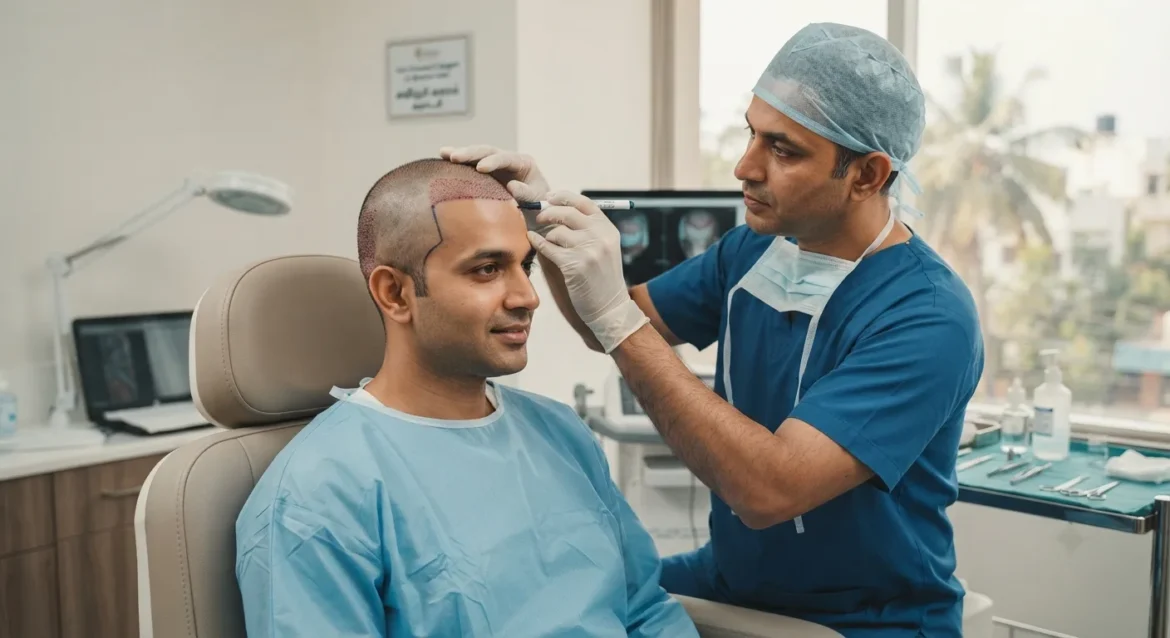
A qualified hair restoration professional evaluates the scalp, identifies the pattern and likely cause of hair loss, examines donor hair and discusses the patient’s expectations. Depending on the clinical findings, tools such as scalp dermoscopy or trichoscopy may help assess hair density and miniaturisation.
The specialist then estimates the recipient area, plans the hairline and decides how to distribute available grafts. Some patients may benefit from medical treatment to stabilise ongoing hair loss before surgery. Not everyone experiencing hair thinning is automatically a suitable transplant candidate.
An experienced hair transplant clinic in chennai should explain the estimated graft count, expected coverage, limitations and possible future requirements before the procedure. A clear treatment plan helps patients make informed decisions rather than choosing surgery based on a high graft-count promise.
Plan Your Hair Restoration with a Proper Assessment
There is no universal graft number that guarantees full hair coverage. The right estimate depends on your hair loss stage, donor supply, scalp characteristics and long-term goals. A personalised consultation can help determine whether a hair transplant is appropriate and what level of coverage may be realistically achievable.
At Construct Face and Hair (CFH), individuals considering hair restoration can enquire about a scalp assessment and discuss suitable treatment options with the clinical team. Contact CFH to understand your hair loss pattern, available donor hair and possible next steps towards a personalised hair restoration plan.
Frequently Asked Questions
1. How many grafts are needed for a full head of hair?
There is no single graft count for a full head of hair. Requirements depend on the area affected by hair loss, donor density, hair characteristics and the desired appearance. People with extensive baldness may need multiple sessions, and complete restoration may not be achievable.
2. Is 2,000 grafts enough to cover a bald area?
It may be enough for a smaller area, such as the frontal hairline or limited thinning. However, 2,000 grafts may not provide adequate coverage for extensive baldness. The result depends on the recipient area’s size and the planned distribution of grafts.
3. How many hairs are there in 1,000 grafts?
A graft usually contains one to four hairs, although the composition varies. Therefore, 1,000 grafts may contain more than 1,000 individual hairs. The actual number depends on the natural follicular units available in the donor area.
4. Can 5,000 grafts be transplanted in one session?
It depends on the patient’s donor density, scalp characteristics, surgical plan and clinical suitability. A large session is not appropriate for everyone. The surgeon must consider donor safety and whether dividing treatment into multiple sessions would be more suitable.
5. Does a higher graft count guarantee better hair transplant results?
No. A higher graft count does not automatically produce a better result. Natural hairline design, graft quality, placement, distribution, donor management and the patient’s existing hair characteristics all influence the final appearance.