Most asbestos jobs don’t start with a plan. They start with someone pausing mid task.
An electrician sees grey sheeting behind an old switchboard in a Preston weatherboard. A builder pulls up carpet in a Dandenong office and finds brittle vinyl tiles underneath. A property manager notices cracked eaves on a rental in Sunshine.
Then comes the obvious question. What happens now?
Good asbestos removal contractors follow a clear process from that first moment to the final paperwork. Here’s how it usually runs in Melbourne.
Step 1: Detection
Asbestos was used in Australian buildings for decades before the national ban at the end of 2003. In Melbourne, it often turns up in:
- Fibro wall and eave sheeting
- Roofing on garages, sheds, and older factories
- Vinyl floor tiles and the adhesive underneath
- Wet area linings in bathrooms and laundries
- Pipe lagging and old insulation in plant rooms
For workplaces, the asbestos register is the starting point. Most workplaces built before 31 December 2003 need one. At home, there’s no register, so it usually comes down to a sharp eye and a willingness to stop work when something looks off.
Step 2: Inspection and testing
You can’t confirm asbestos by looking at it.
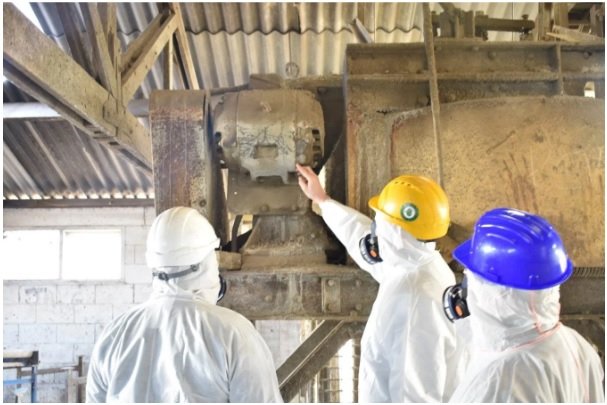
An assessor inspects the area and takes small samples, which go to a NATA accredited laboratory. The results tell you whether asbestos is present, what type it is and whether it’s friable or bonded.
That last detail decides almost everything that follows.
Step 3: Planning and notification
Victoria runs its own Occupational Health and Safety (OHS) laws. Asbestos at work falls under the OHS Act 2004 and the OHS Regulations 2017, and WorkSafe Victoria enforces them.
Licensing works in two classes. Friable asbestos needs a Class A licence. Bonded asbestos over 10 square metres needs at least a Class B.
Before licensed work starts, the contractor prepares an asbestos removal control plan. It sets out what’s being removed, how, and the controls in place.
They also notify WorkSafe Victoria. For friable work, or more than 10 square metres of bonded material, that notice has to be given at least five days before the job begins. So, if your program is tight, build that week in.
Step 4: Setting up the site
On the day, the crew prepares the area before anything comes out.
Signs and barriers mark an exclusion zone. Air conditioning serving the space may need to be shut down. For friable work, the area is sealed inside a plastic enclosure under negative air pressure, with a decontamination unit for workers.
Melbourne’s weather plays a part too. A gusty northerly or a run of wet days can push back roof and external work, so experienced crews plan with some slack.
Step 5: Removal
The crew keeps the material wet to stop fibres lifting. Bonded sheets are unscrewed or unbolted and taken off whole where possible. Friable material is removed inside the enclosure, with air monitoring throughout.
Everything is wrapped in heavy plastic, sealed, and labelled as it comes off. Nothing gets dropped, snapped or swept dry.
Step 6: Decontamination and clearance
Once removal is done, the area is cleaned thoroughly. Tools, equipment, and workers go through decontamination before leaving.
An independent competent person then carries out a clearance inspection. If the area passes, a clearance certificate is issued, and the space can be used again.
Keep that certificate. Builders, tenants, and future buyers may want to see it.
Step 7: Disposal
Asbestos waste in Victoria has to be transported under EPA Victoria requirements and taken to a facility licensed to accept it.
It can’t go in a household bin, a general skip or a council hard rubbish collection.
Reliable contractors handle the transport and give you disposal records showing where each load went.
Step 8: Records
The job isn’t finished until the paperwork is.
At the end, you should have the test results, the control plan, any air monitoring results, the clearance certificate and the disposal records. For a workplace, the asbestos register should be updated to show what was removed.
Choosing the right team
Plenty of businesses offer asbestos removal Melbourne wide. The process above is a good way to compare them.
Ask any asbestos removal contractors you’re considering:
- Which WorkSafe Victoria licence do you hold, and does it cover this job?
- Do you arrange testing, or should we book it separately?
- How much notice do you need before starting?
- Who does the clearance inspection?
- Where does the waste go, and will we get records?
If a quote skips steps, or the answers turn vague, keep looking.
Ready to get started?
Spotted something that looks like asbestos? Stop work, keep people away and get it tested.
Then talk to a licensed provider of asbestos removal Melbourne homeowners and businesses rely on. The earlier they’re involved, the easier it is to fit the work into your plans.