
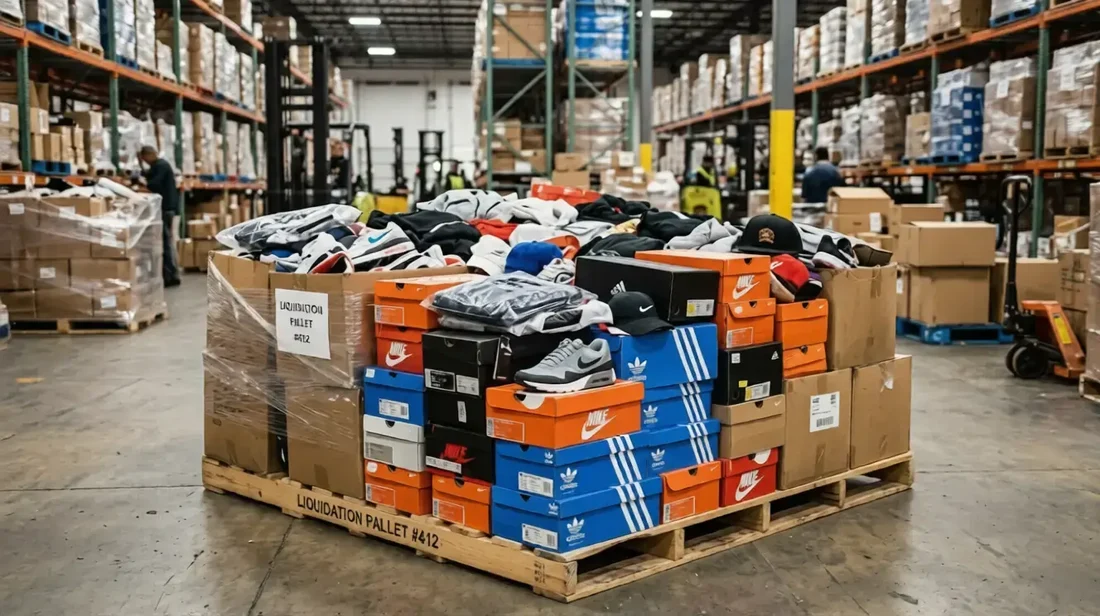
A resale business built around surplus and end of line goods needs a balanced stock mix. The right mix gives customers enough choice, protects cash from being trapped in slow lines and keeps the operation flexible when supply changes.
Build around dependable categories
A useful starting point is to identify categories that the business already understands. Familiar products are easier to price and sell because the reseller knows likely demand. These dependable lines can form the range, while smaller quantities of unfamiliar goods are tested.
Use mixed supply to widen the offer carefully
Surplus stock can help a reseller add variety without committing to permanent ranges. Liquidation pallets may contain several product groups, which can be useful when the business has more than one suitable sales channel. The important point is to avoid adding variety simply for its own sake. Every category should have a likely buyer and a practical route to sale.
Balance fast and slow sellers
A healthy mix does not require every product to move at the same speed. Some goods may sell quickly at modest margins, while others take longer but produce more value per unit. Problems arise when too much cash is tied up in slower stock at once. Tracking how long products remain unsold can help the reseller decide which categories deserve more buying budget.
Treat seasonality as a timing issue
End of line goods are often connected to changing seasons, ranges or packaging. A seasonal product bought at the wrong point in the year may need months of storage before demand returns. The same product bought close to a selling window could move quickly. Buyers should therefore compare the purchase date with the likely selling period, not just with the original retail price.
Leave room for condition differences
Not all surplus goods arrive in identical condition. Packaging may be marked, labels may have changed, or individual units may need checking. When liquidation pallets include varied conditions, the reseller can separate stock into appropriate channels rather than forcing everything into one price level. Clear descriptions also help customers understand exactly what they are buying.
Plan the mix by space as well as value
Stock planning often focuses on money, but storage capacity can be the tighter limit. Bulky low-value goods may use more warehouse space than their expected return justifies. Compact products can sometimes provide a better fit for a small operation. Comparing margin with physical footprint creates a more practical buying rule.
Create more than one exit route
A resale mix becomes more resilient when products can move through different channels. The main website or shop may take the strongest items, while bundles, marketplaces or trade sales can handle slower or less consistent stock. Having a secondary route is particularly useful for lines that arrive unexpectedly or do not match the core range.
Review the mix after every buying cycle
The best assortment is not fixed. Resellers should compare what sold quickly, what required markdowns, what generated excessive customer queries and what remained in storage. Those lessons can shape the next purchase. Over time, liquidation pallets can then be selected for how well they support the existing business rather than simply for the apparent discount.
Keep buying rules simple
A clear set of buying rules helps prevent the assortment from drifting. The reseller might set limits for maximum spend by category, expected weeks of stock, storage space and the proportion of unfamiliar items in each order. When reviewing liquidation pallets, those rules create a consistent filter even when the available products change from week to week. They also make it easier to explain why one apparently cheap lot is rejected while another is worth testing.
Surplus and end of line goods reward flexibility, but flexibility still needs rules. A balanced mix combines familiar demand with controlled experiments, keeps storage within limits and gives slow stock a planned exit. That approach helps the reseller use irregular supply as a source of opportunity without allowing the range to become random.