Spring in South Asia is a beautiful time of change. The cold winter slowly goes away, and the strong summer heat has not yet started. For travellers planning a Raxaul to Nepal tour package, this season is one of the best times to travel. The journey from Raxaul in Bihar to Nepal is not just about crossing the border — it feels like moving into a new atmosphere step by step. The flat fields slowly turn into small hills, dry roads become greener, and the air feels cooler and fresher as you go closer to the mountains.
During spring, the sky is usually clear, trees and flowers start blooming, and the weather stays comfortable for long drives. You may even see beautiful Himalayan views in the distance. Along the way, you’ll notice a mix of cultures, languages, local markets, and mountain life that make the trip both interesting and meaningful. In this guide, you will learn everything important — from spring weather and scenic spots to simple travel tips and local experiences — to help you enjoy this cross-border road trip in the best way.
Spring Weather on the Raxaul–Nepal Corridor: Comfortable & Clear
Spring (March to May) is arguably the best time for this road trip.
Temperature & Feel
- In Raxaul and the Gangetic plains, midday temperatures stay comfortable — generally between 20°C and 30 °C.
- Early mornings and late evenings can be fresh, sometimes necessitating a light jacket.
- Once you climb toward the Himalayan foothills (if your journey takes you beyond Kathmandu or Pokhara), temperatures get cooler — especially near dawn.
Sky & Visibility
Unlike winter’s occasional smog or summer’s dust haze, spring boasts clear skies most days. This clarity makes it ideal for:
- Mountain watching — especially views of Everest, Annapurna, Langtang, and other ranges when you reach central Nepal.
- Photography — crisp colours, bright lighting, and vibrant landscapes.
Rain & Humidity
Spring sees minimal rainfall before the monsoon arrives in late June. You might get scattered showers in May, but they rarely disrupt travel. Humidity rises slowly toward late May, but spring is generally dry and comfortable.
Best Time to Travel Daily
- Depart early: 6:00–7:30 AM, when roads are quieter, and temperatures are cool.
- Lunch break around 12:30–2:00 PM, then resume to avoid afternoon heat or late traffic.
- Arrive at your destination before dusk — Nepal’s roads are more enchanting but trickier at night outside main cities.
Landscape & Scenic Transitions: From Plains to Peaks
A road trip isn’t just distance — it’s shifting landscapes, sounds, and emotions.
Starting: Raxaul & the Terai Plains
Leaving Raxaul, the road stretches through:
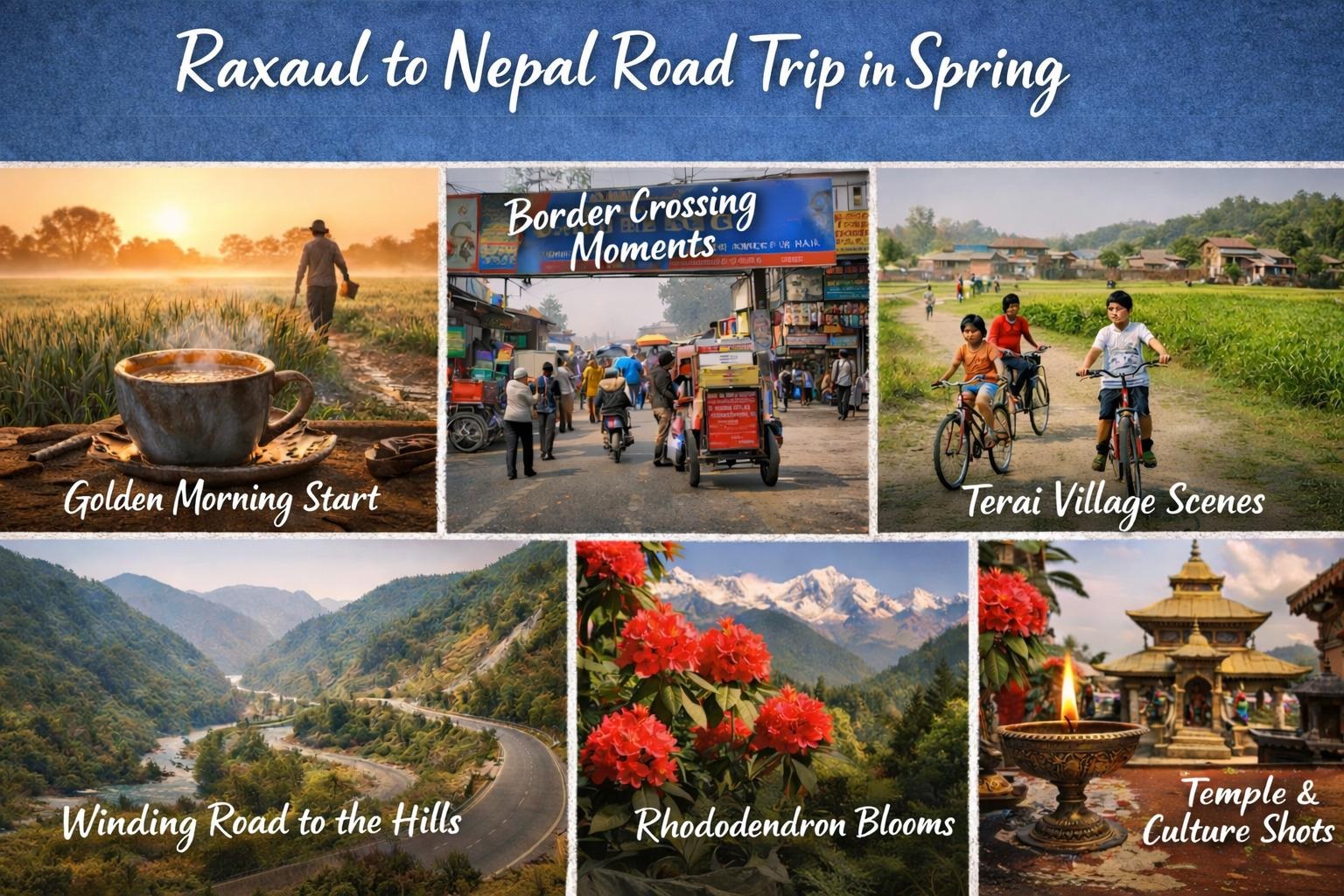
- Agricultural fields waking up in spring — wheat green and lush.
- Riverine groves where koel birds and mynas call.
- Small towns and roadside tea stalls pop up, each with the comforting smell of chai.
Here, road travel feels immediate and grounded. The wind doesn’t yet carry mountain scents — it smells of soil, crops, and earth waking up.
As You Approach the Nepal Border
The (Raxaul–Birgunj) is more than a crossing point — it’s where cultural rhythms of India and Nepal begin to blend:
- Nepali shop signs appear along bazaar roads.
- Street foods carry a slightly different spice note.
- Motorbikes and colourful tempos weave with Nepali passengers and porter bags.
Once customs formalities are over, you begin the gradual ascent—not a towering climb yet, but a shift from flatness to the rolling Terai.
Terai to Hills: A Gradual Change
After Birgunj, the onward roads take you:
- Past paddy fields, mustard blooms, and sugarcane stretches.
- Through small towns where children in uniforms greet you with curiosity.
- Toward gentle rises — nothing vertical yet, but a steady elevation that makes horizons seem broader.
Reaching the Hills (if you continue past Kathmandu)
By the time you reach the outer foothills, spring blooms take over:
- Rhododendrons flare in red and pink along cut slopes.
- Terraced farms knit the land into green staircases.
- Rivers, once thin in winter, flow more strongly with spring meltwater.
And if the weather is kind, the high Himalayan peaks come into view — a sudden cosmic surprise after miles of plains and mid-hills.
Cultural Colours Along the Road
This is not just a physical journey; it’s a cultural immersion.
Villages & Towns En Route
From Raxaul to Birgunj, roadside towns hum with daily life:
- Morning markets brim with vegetables, spices, and local sweets.
- Women in bright saris check produce, while children chase each other around makeshift stalls.
- Motorbike horns sing, and bicycle bells chime.
Once across into Nepal:
- Sanskrit chants from roadside shrines mingle with Nepali folk music.
- Local eateries offer dal bhaat, momo, and fresh spring greens.
- You’ll hear Nepali spoken with rhythmic intonations, and sometimes Hindi — especially in border regions.
Temples & Shrines
Stop if you see a small temple — often places of genuine warmth:
- Locals may invite you for prasad (blessed food).
- You’ll notice differences in worship style — garlands of marigolds, bells, and oil lamps.
- It’s respectful to observe quietly, and if invited, participate with gratitude.
Spring Festivals
Depending on timing, you might witness:
- Holi — splashes of colour and laughter around March.
- Nepali New Year (Baisakh) — fresh beginnings and open markets.
Both bring out community spirit — dancers, drums, laughter.
Top Road Trip Tips from Locals & Travelers
1. Border Formalities Made Simple
- Keep your passport and visa documents ready.
- Indians may not require a traditional visa for short travel, but ensure documents are in order.
- Customs lanes can get busy around noon — arriving early helps.
2. Fuel & Rest Stops
- Always refill before long stretches between towns.
- Nepal’s fuel stations sometimes operate limited hours in smaller towns — best to fill up mid-day.
3. Safety & Driving Conditions
- Roads are mostly smooth between the plains and mid-hills, but potholes can appear after rain showers.
- Night driving is possible but best avoided in rural stretches.
- Always carry basic tools, water, and snacks.
4. Cash is King
While digital payments are increasingly accepted, many small eateries and stalls still prefer cash — especially Indian rupees near the border and Nepali rupees further in.
5. Respect Local Customs
- Greet with a gentle Namaste or a smile.
- At temples, remove shoes where required.
- Ask before taking photos of people — many will be happy to smile for you.
Why Spring Makes This Journey Special
Spring is not just about comfortable weather. It’s about atmosphere. Nature feels alive. Trees are blooming, the wind feels soft, and the roads are not covered in fog or heavy rain. There’s a certain calmness in the air.
This road trip becomes more than just travel. It becomes a story. The slow change from plains to hills, the mix of cultures, the roadside tea breaks, and the first glimpse of mountains all combine into something memorable.
Final Thoughts: More Than a Trip — A Memory
A spring road trip from Raxaul to Nepal is more than just a drive across the border — it’s a journey filled with changing landscapes, fresh mountain air, and quiet moments that stay with you long after the trip ends. As the plains slowly turn into hills and the roads begin to wind toward the Himalayas, every mile feels like a new experience.
The pleasant spring weather, blooming greenery, and clear skies make the drive smooth and refreshing. But what truly makes this trip special are the simple memories — early morning tea, roadside stops, shared laughter, and that first breathtaking view of the mountains.
In the end, it’s not just about reaching Nepal. It’s about the feelings, the views, and the moments along the way that turn a simple road trip into a lasting memory.