
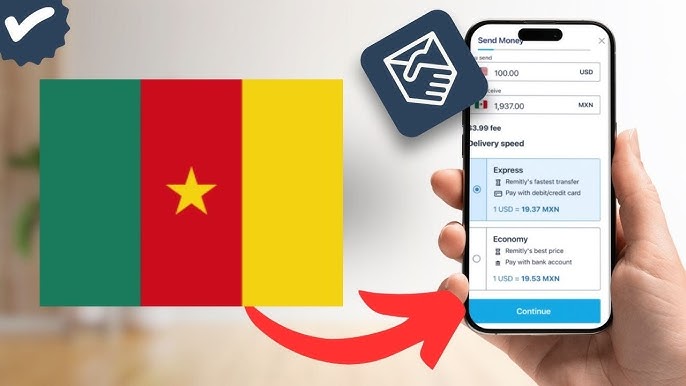
For the vibrant Cameroonian diaspora scattered across Canada, the UK, Europe, and the United States, maintaining financial ties with home is more than a duty—it is a lifeline. Whether supporting elderly parents in Yaoundé, paying for university tuition in Douala, or funding construction projects in Bafoussam, the flow of remittances is vital to the local economy.
However, the logistics of cross-border finance can be complex. For decades, traditional banks held a monopoly on international transfers, often dictating high fees and slow service. Today, the fintech revolution has introduced agile digital alternatives, creating a competitive marketplace.
If you are looking to maximize the value of your remittances, understanding the differences between these two methods is essential. This guide explores the pros and cons of digital platforms versus traditional banks to help you decide the best way to send money to Cameroon efficiently and affordably.
The Traditional Banking Route: Reliability at a Cost
Historically, if you wanted to move funds from a bank account in London or New York to Cameroon, you relied on the SWIFT network (Society for Worldwide Interbank Financial Telecommunication). This is the infrastructure that traditional high-street banks use to communicate and move capital.
While traditional banks are undeniably secure and capable of handling massive sums (useful for corporate transactions or property purchases), they often fall short for personal remittances.
The Drawbacks of Wire Transfers
- High Fixed Fees: Banks often charge a flat fee ranging from $25 to $50 per transaction, regardless of the amount sent. For a $200 remittance, this is prohibitively expensive.
- Unfavorable Exchange Rates: Banks typically set their exchange rates once a day, adding a significant markup (spread) over the mid-market rate.
- Slow Processing: A standard wire transfer can take 3 to 5 business days to clear, sometimes longer if intermediary banks are involved.
- Paperwork: Sending money via a bank often requires visiting a branch, filling out forms, and adhering to strict banking hours.
The Digital Revolution: Speed and Accessibility
In the last decade, the landscape of international money transfer to Cameroon has shifted dramatically. Specialized money transfer operators (MTOs) and fintech companies have emerged to bridge the gap left by traditional banks. These digital-first providers focus on reducing overhead costs and passing those savings on to the customer.
Furthermore, the financial infrastructure in Cameroon has evolved. According to recent data from the GSMA, Central Africa is one of the fastest-growing regions for mobile money adoption. Services like MTN Mobile Money and Orange Money have become ubiquitous, allowing people to receive funds instantly on their phones without needing a formal bank account.
Why Digital is Taking Over
The primary appeal of digital platforms is the ability to transfer money to Cameroon online without leaving your home. By linking a debit card or bank account to an app or website, the diaspora can initiate transfers 24/7.
Key advantages include:
- Lower Fees: Digital providers usually charge a fraction of what banks do, sometimes even offering fee-free transfers for new customers.
- Instant Delivery: When sending to mobile wallets or for cash pickup, funds are often available within minutes.
- Transparency: You see the exact amount your recipient will get in Central African CFA Francs (XAF) before you hit send.
Comparing the Costs: Hidden Fees and Exchange Rates
The most critical factor for most expats is the cost. It is important to realize that the “fee” advertised by a provider is only half the story. The other half lies in the exchange rate.
When you send money, you are selling one currency (e.g., USD, GBP, EUR) to buy another (XAF). Banks and some transfer services make a profit by offering you a rate that is lower than the real market rate.
To ensure you are getting a fair deal, you should always use a reliable currency converter to check the current mid-market rate. By comparing the rate shown on the converter with the rate offered by your bank or transfer service, you can calculate the “hidden” cost of the transfer. Digital platforms tend to offer rates much closer to the mid-market rate than traditional banks, resulting in more XAF arriving in your beneficiary’s pocket.
Navigating the Logistics: Where Should the Money Go?
Choosing the right method isn’t just about the sender’s convenience; it is about the recipient’s needs.
- Bank Deposits: If you are sending a very large sum (e.g., over $5,000), a direct transfer to a bank like Ecobank, UBA, or Afriland First Bank might still be the most secure option, despite the delay.
- Mobile Wallets: For daily expenses, school fees, or emergencies, mobile money is king. It is immediate and accessible even in rural areas.
- Cash Pickup: For recipients who prefer hard cash or lack access to technology, WorldRemit, Ria, or Western Union agents remain viable, though fees vary.
For those who are new to the process or dealing with complex banking requirements, reading a detailed blog post on money transfer to Cameroon can provide deeper insights into the specific identification requirements and limits associated with different payout methods.
Security: The Trust Factor
One reason many people stick with traditional banks is the perception of safety. However, modern digital transfer services are heavily regulated. They are required to use bank-level encryption and adhere to strict compliance standards set by bodies like the FCA (UK), FINTRAC (Canada), and FinCEN (USA).
When selecting a service, you are essentially choosing a financial ally. A trustworthy Money transfer partner will offer robust customer support, transparent tracking systems, and clear refund policies if a transaction fails. Always look for user reviews and regulatory badges on the website before signing up.
The Verdict: What is the Best Way?
While traditional banks still have a place in the financial ecosystem, they are rarely the best way to send money to Cameroon for personal remittances. The combination of high fees, poor exchange rates, and slow delivery times makes them inefficient for the average expat.
Digital transfer services offer a superior alternative, blending speed, low costs, and convenience. They align perfectly with the modern reality of Cameroon’s economy, where mobile money is the dominant form of transaction. By moving away from legacy banking habits and embracing digital platforms, the diaspora can ensure that their hard-earned money goes further, providing greater support to the families and communities that rely on it.